Do what matters. Stop on time.
Feierabend checks your day against the hours you really have, asks for the one thing that matters, and closes the day so the evening is yours. Built on decades of research on why plans fail.
In beta. Every request is looked at by hand.
Feierabend (FY-er-ah-bent), German, noun. The moment work is over and the evening is yours. English has no word for it, which explains a lot.
You know how this goes
In the morning you write down twelve things. You are full of hope. By three you have done four, answered forty emails, and started avoiding the list. In the evening you did a decent day’s work and feel like you failed.
You did not fail. The plan did. It was written for someone with endless willpower and no meetings. That person has never once shown up.
What Feierabend does about it
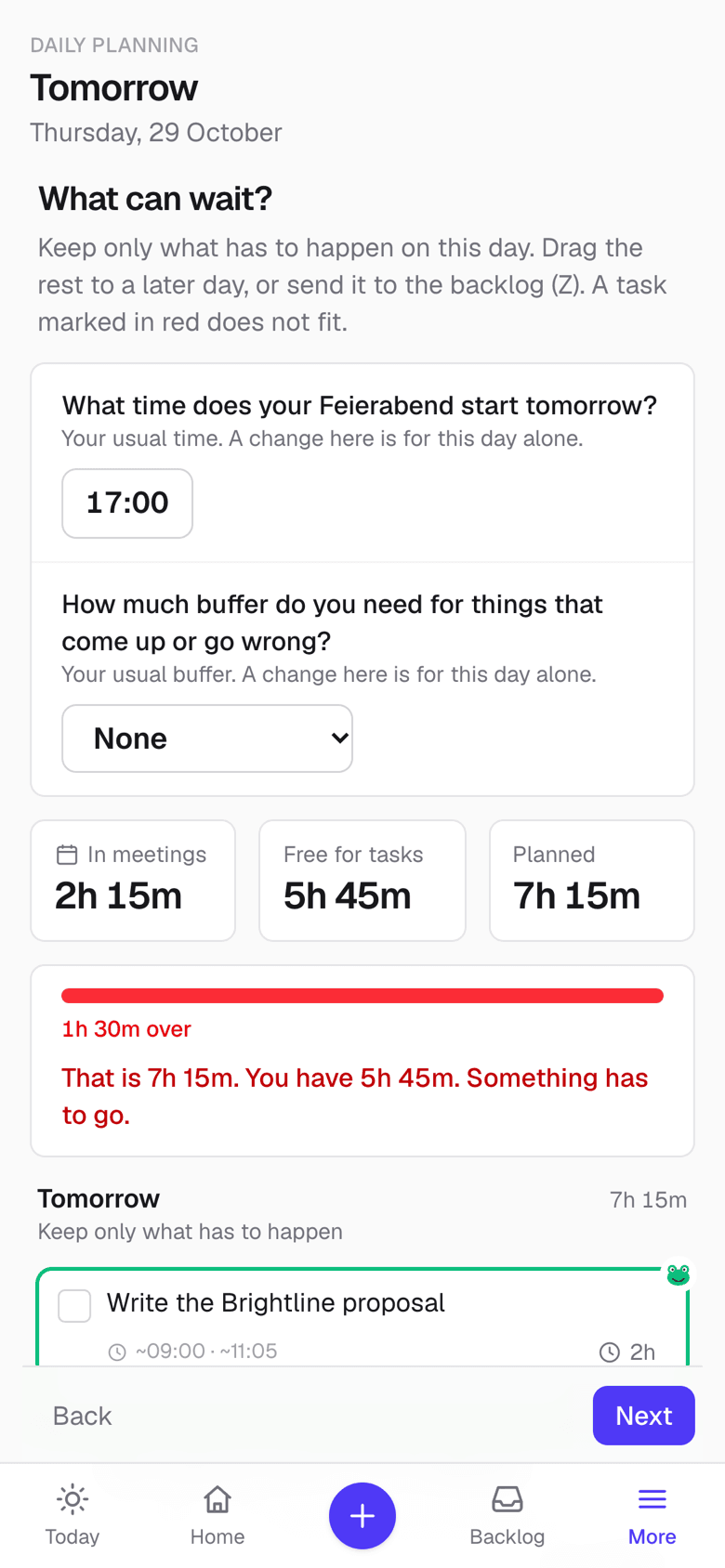
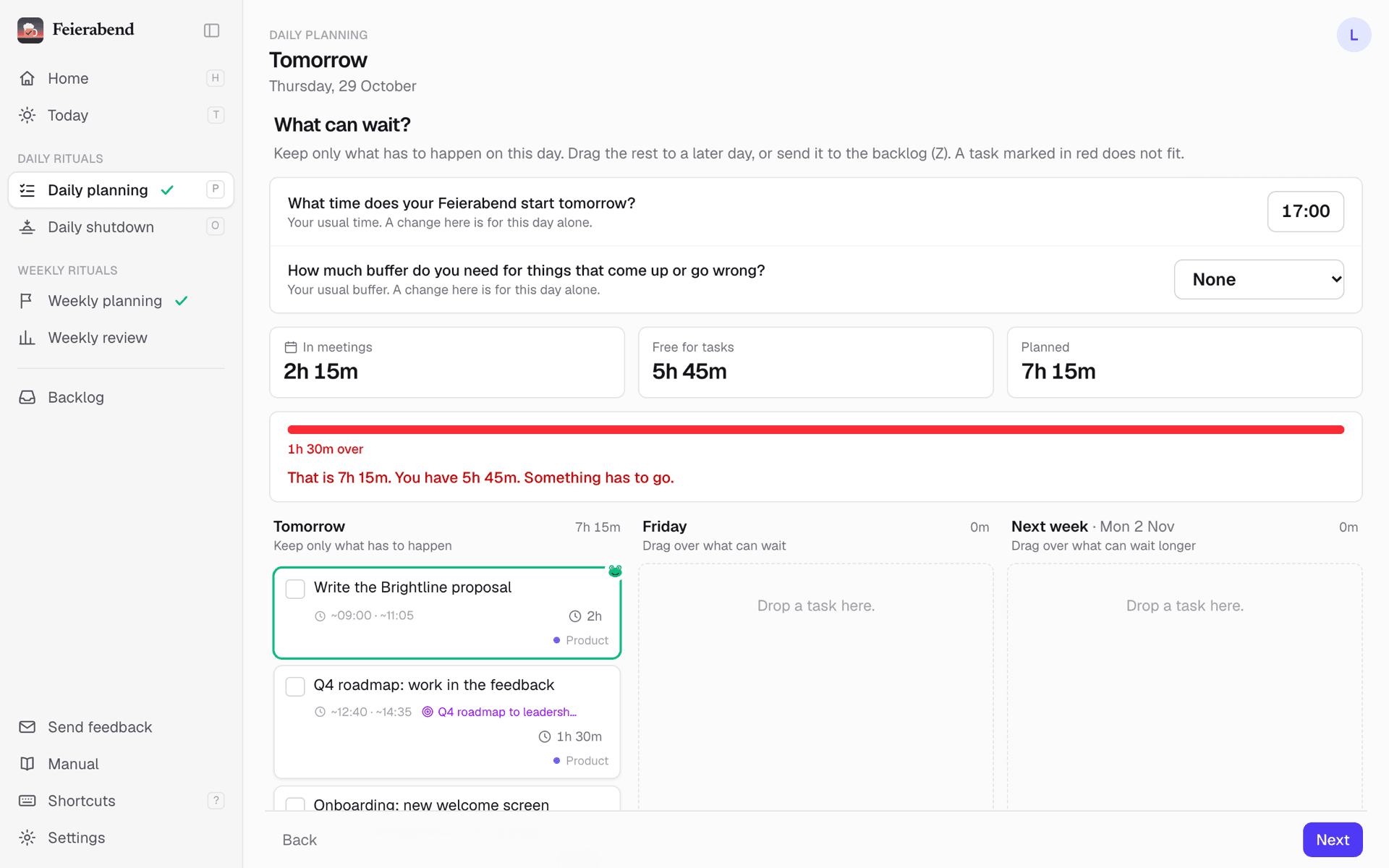
It does the maths you avoid.
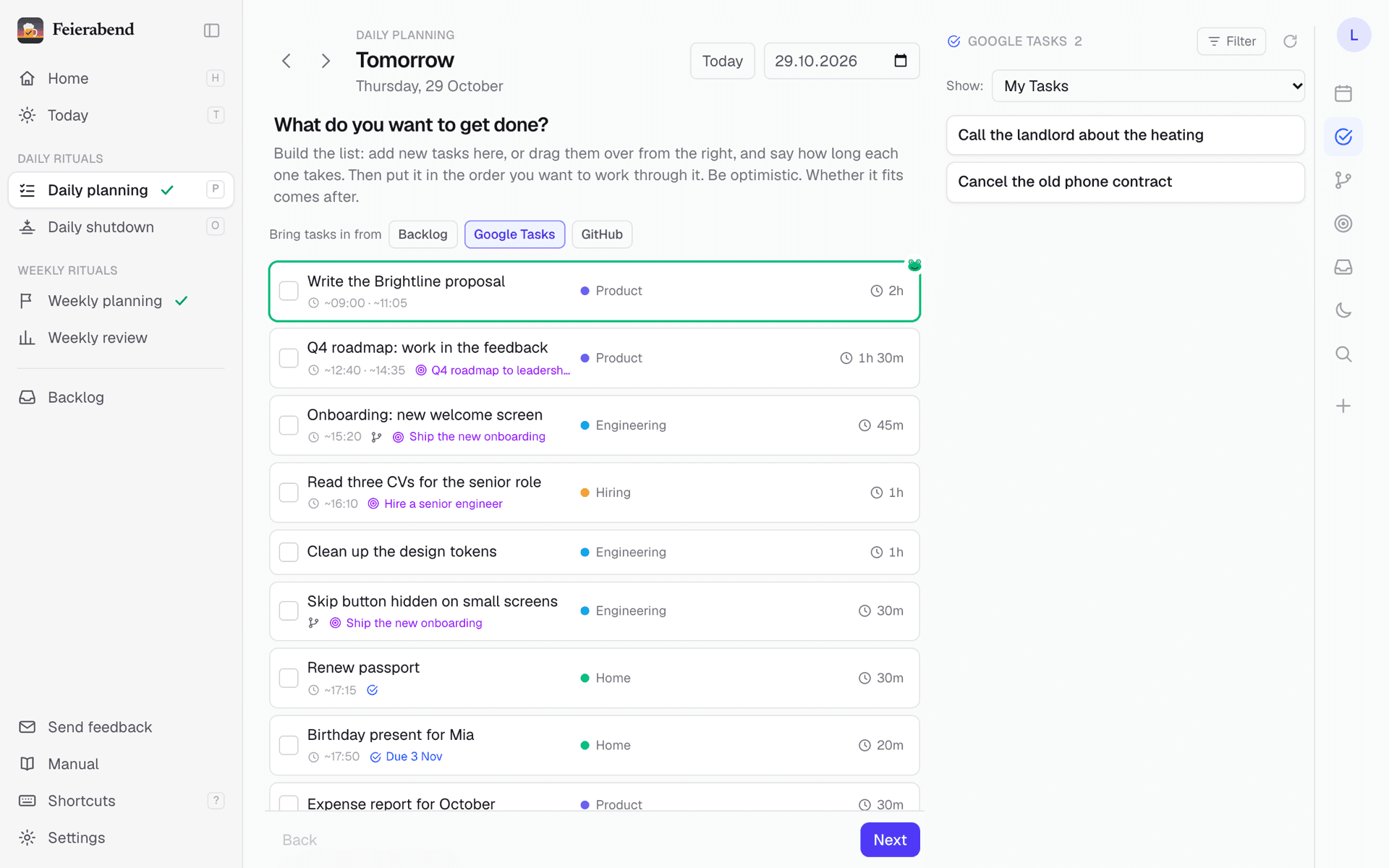
Your tasks, your meetings, your working hours, on one page. “That is 11 hours. You have 6. You know this. You do it every day.”
It asks what can wait.
You take things off in the morning, on purpose, instead of at six in the evening, by failing.
It asks for one thing that matters.
If only that gets done, the day counted.
It ends the day.
You look at what you did, decide where the rest goes, and close. Then you stop. That is the feature.
During the day
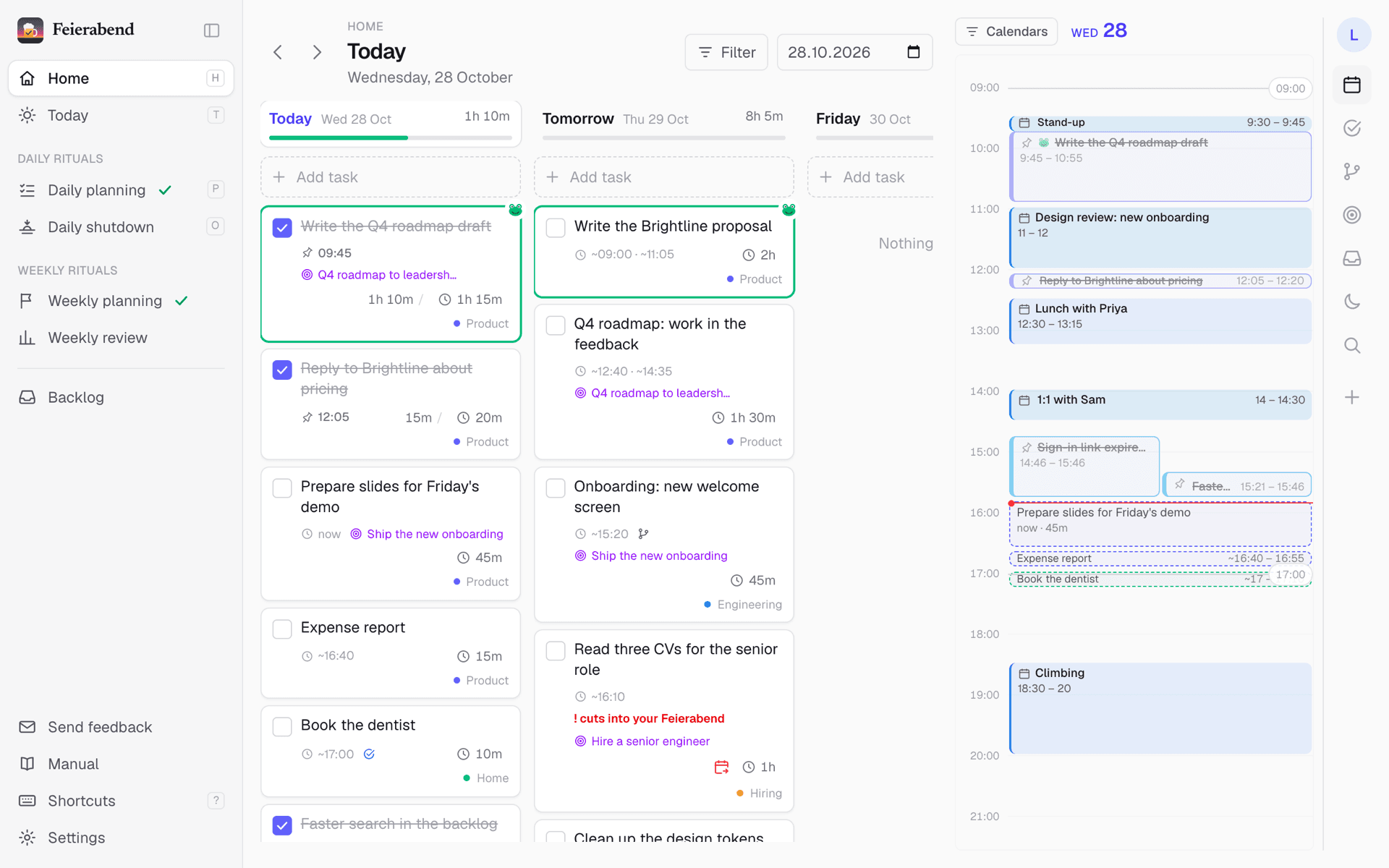
Your meetings from Google and Outlook on one calendar, your tasks placed in the gaps between them. When something runs over, the rest moves back instead of falling off.
In the evening
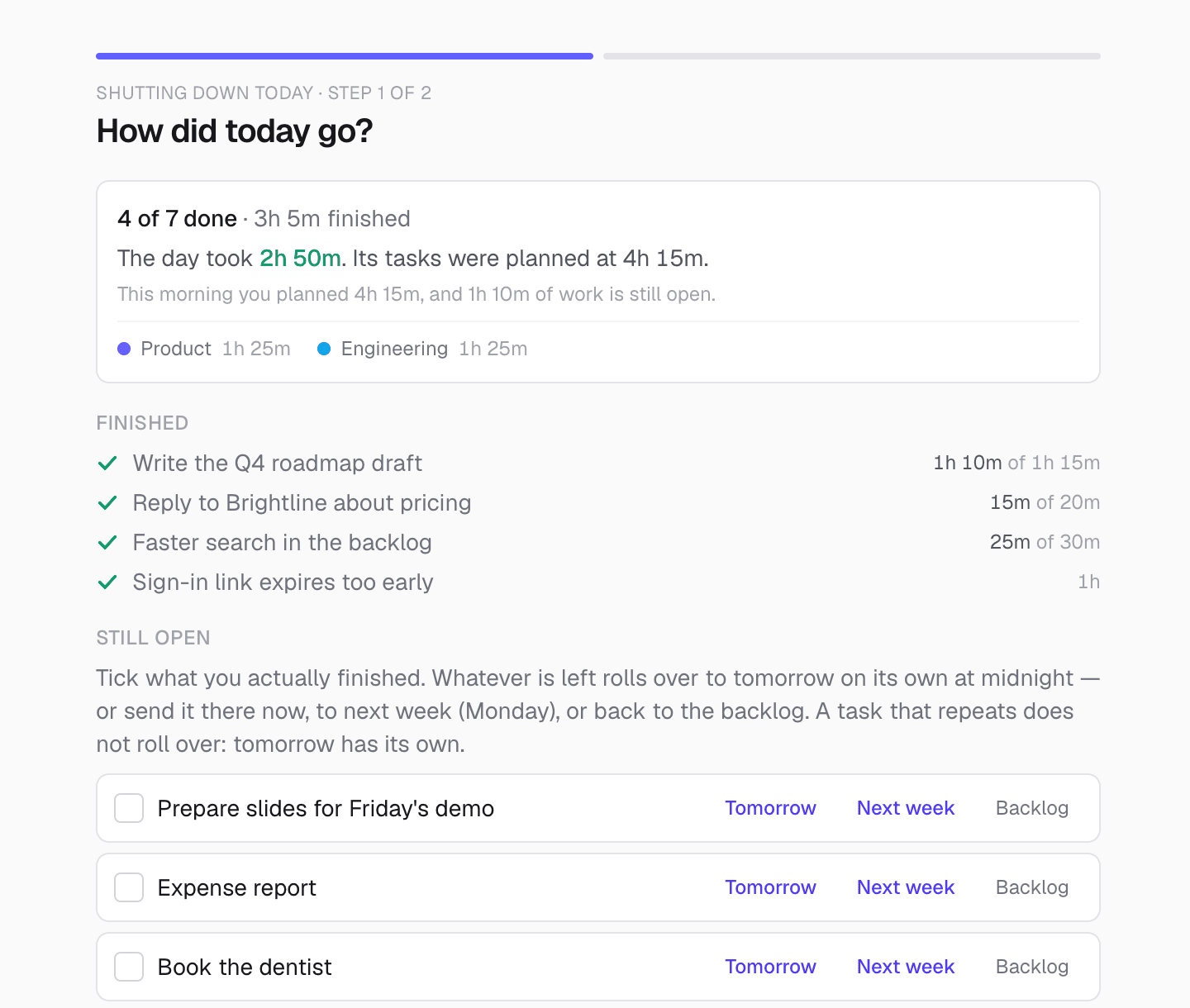
What you did, how long it really took against what you planned, and a place for everything still open: tomorrow, next week or the backlog. Then the day is closed.
Why it works
None of this is new. Psychologists have studied for decades why plans fail and why evenings get eaten. Feierabend puts a few of their findings where you plan.
- We underestimate how long things take.
- It happens even to people who know about it. So every morning Feierabend adds up your estimates against the free hours between your meetings, lets you keep a buffer for what goes wrong, and in the evening shows how long things actually took.
- The planning fallacy: Kahneman and Tversky; Buehler, Griffin and Ross
- A plan that says when gets done more often.
- Each task gets a place on your calendar, around your meetings, instead of floating on a list.
- Implementation intentions: Gollwitzer
- A few clear goals beat a long list.
- One thing that matters each day, and a handful of objectives for the week that your tasks are linked to. A weekly review shows how they went.
- Goal-setting theory: Locke and Latham
- An evening only rests you if work stays out of it.
- Your working day has an end time. The shutdown gives every unfinished task a place, so it does not follow you home.
- Recovery and detachment from work: Sonnentag
Works with what you already use
- Google Calendar and Outlook. Your meetings on your day, from as many accounts as you have.
- Google Tasks. Two-way sync: pull your tasks in, tick them off on either side.
- GitHub. Issues and pull requests waiting for you. Close an issue here and it closes on GitHub.
- Mail. Forward a mail to your own address and it becomes a task.
On your phone too
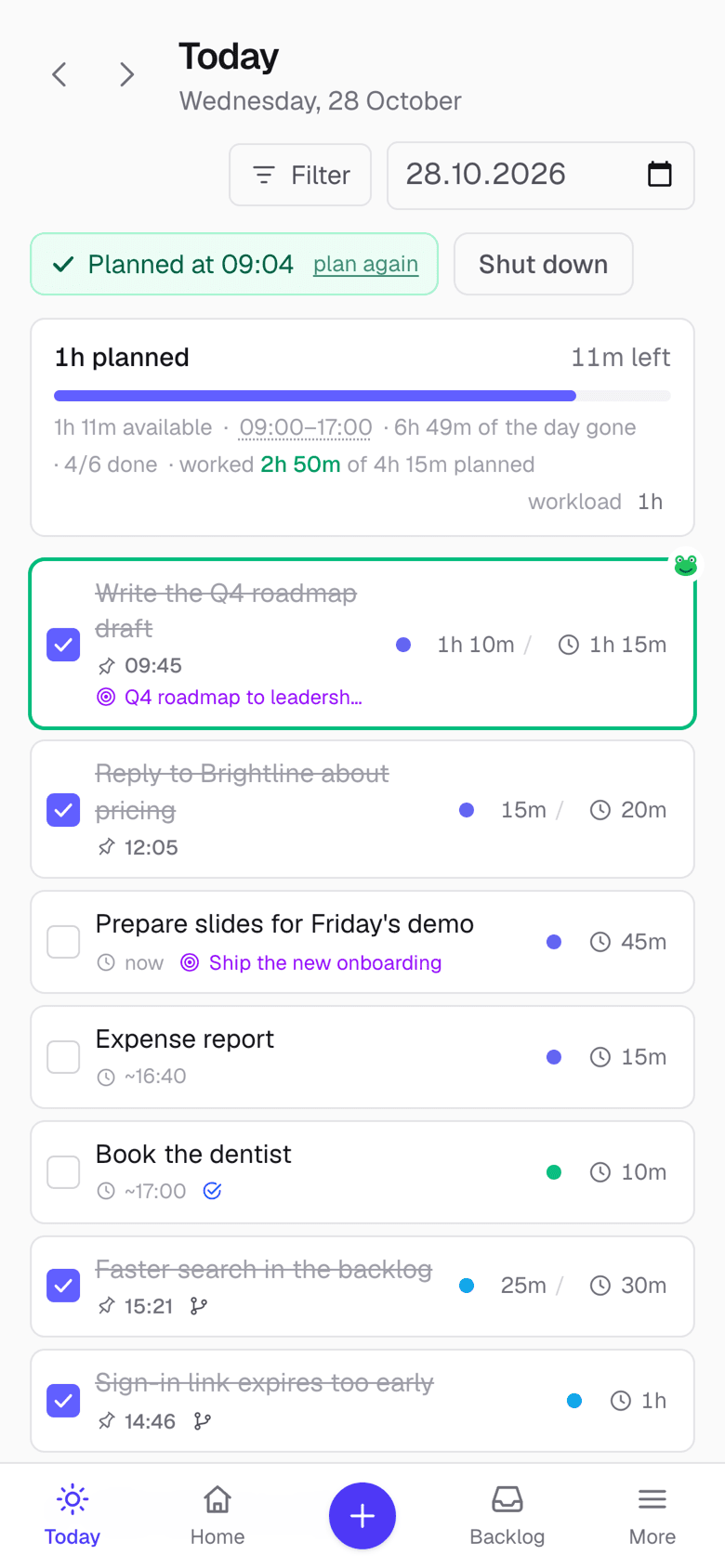
The same plan in your pocket: today’s list, the check against your hours, the shutdown in the evening.
What it will not do
No score. No points for being busy. No AI that claims to know your priorities. No promise that you will finally get everything done. You will die with things left on the list. Today we only decide which ones.
Your calendar, and what happens to it
The plan is only honest when your meetings are on it. So Feierabend shows your Google or Outlook calendar next to your tasks. It only ever reads it: nothing you plan here is written back. If you keep tasks in Google Tasks, you can pull them in, and when you finish one here it is ticked off there too. That is the only change it makes.
Your plan is yours. It is not sold, not shown to advertisers and not used to train anybody’s AI. The privacy statement says exactly what is kept and why.
Request access
Feierabend is in beta. Leave your address, and you get one mail when you are let in.
Accept that you are human and you get more done. Mostly because you stop freezing in front of a list no one could finish.
Plan the day. Enjoy the evening.